
The LED lighting industry has long been a fiercely competitive red ocean, but the segmented markets of intelligent and personalized lighting continue to grow rapidly. In commercial spaces and home decoration scenarios, consumers are no longer satisfied with simple on/off control; they want lighting that can “understand” human movement trajectories and naturally integrate into daily life scenes.
One of V-SOUND’s clients recognized this trend. In the client’s showroom, a 0.5-meter LED strip is demonstrating a “chase of light and shadow.” As the engineer slides his hand from left to right, 30 LED beads light up in sequence with white light, then switch to red, and finally turn off one by one. The entire process is smooth and fluid, as if the LED strip has “eyes” that accurately capture each human motion.
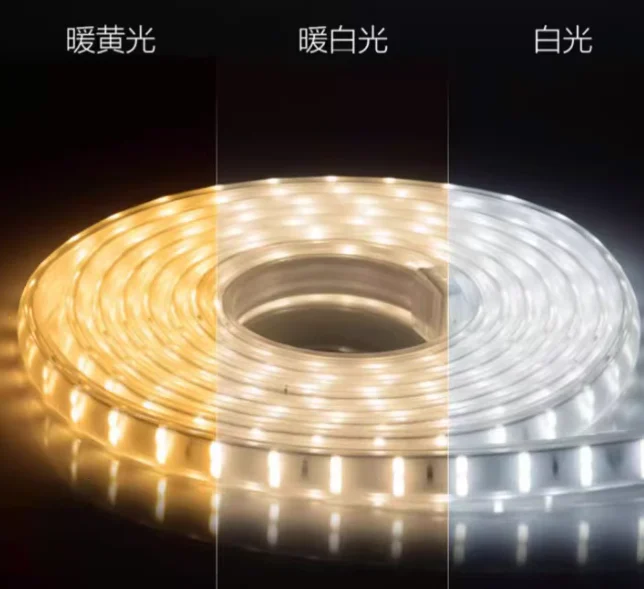
This is not a special effect, but an innovative human-sensing LED strip solution jointly launched by V-SOUND and the client for the intelligent lighting market. As competition intensifies in the LED lighting industry, consumers’ needs for intelligent and personalized lighting products have become increasingly prominent. From smart home night lights in hallways, to ambiance lighting in commercial spaces, to safety lighting in industrial warehouses, the market is calling for more precise and flexible sensing-control technology. More and more companies are seeing this track and have begun a journey of technological breakthroughs.
01 – The Precision Challenge: A Sensor for Every 3.3 cm LED Bead
“The difficulty of this project far exceeded our expectations,” admitted a V-SOUND R&D engineer.
Traditional human-sensing LED strips usually adopt an overall control mode—one sensor controls the on/off state of the entire strip. But the end customer’s requirements were far more refined: a one-meter strip contains 30 LED beads, with only 3.3 cm between each bead, and each bead must have its own sensing module to achieve a “light-on when approached, light-off when passed, responding bead by bead” effect. Even more demanding, when a person stands at a specific side position relative to the strip, only the corresponding LED should light up while others remain off.
What does this mean? Each sensor must have a detection distance precisely controlled within 10–20 cm—neither “blind spots” that cause missed detection nor “over-sensing” that leads to false triggers. With 30 sensors arranged densely, how can signal interference between adjacent modules be avoided? The strip also needs to support multiple installation forms such as flat placement and bending—how can sensor stability be ensured?

“Nothing on the market meets such high-precision and personalized control requirements.” After multiple rounds of research, the client’s engineers realized this was a technical problem requiring breakthroughs from scratch. Although the end customer was relatively flexible on cost, finding a balance between advanced functionality and reasonable cost remained a major hurdle on the road to productization.
02 – The Breakthrough: Miniature Sensors + Modular Design
After continuous testing, V-SOUND provided an optimized solution, identifying the key components—the combination of the WT40 series infrared sensing modules and the WT2801 main control chip.

The WT40 series is an MCU-based infrared sensor designed for object detection. Its biggest advantages are being “small yet precise”: its compact size allows integration into the control circuit of each LED bead; it supports detection distances up to 90 cm; standby power consumption is only 16 µA; and operating voltage ranges from 3.0–5 V. More importantly, its infrared response speed offers four adjustable levels (250 ms / 500 ms / 1000 ms / 2000 ms), enabling flexible adaptation to different lighting sequence requirements.
The technical solution became clearer: every 0.5-meter strip is equipped with one WT2801 main control chip plus 8 sets of IR transmitters and receivers, which can be combined to form a complete 2.5-meter roll. After receiving infrared signals, the WT2801 precisely controls LED color changes and timing—the complex logic of “1 second white light, 10 seconds red light” is realized. With modular design, the strips support back-end cutting, with the main control at the front, greatly improving product flexibility.
To meet the client’s need for takeover by the main control board, the team adopted a signal-switching scheme to ensure smooth handover between the two control systems.
This innovative technical route truly embodies a human-centered philosophy: two independent circuits are designed within the strip. One circuit uses SPI signals to control LED color and brightness under the client’s main control board; the other allows each cuttable sensing unit to operate independently. The two circuits do not interfere with each other.

Sensing functionality can be toggled via a switch. When traditional control is needed, the main control board takes over the strip; when intelligent tracking is needed, the sensors become active. This “dual-line parallel” architecture meets functional demands and leaves room for future upgrades.
In implementation, the team selected the high-precision, high-sensitivity, compact WT40 infrared module to ensure integration into each LED bead’s circuit. Through optimized sensor layout and improved signal-processing algorithms, precise side-position sensing was achieved.

In terms of cost control, the team reduced cost by streamlining the circuit and optimizing component selection while maintaining all required functions. Adjustable interfaces for sensing distance, LED color, and flashing time were reserved during development to save future iteration time. Notably, the team also anticipated dust buildup on outer casing tubes that might affect sensing performance and provided the client with a complete preventive solution before shipment, avoiding potential issues in later use.
03 – From Lab to Mass Production: Miniature Sensors + Modular Design Unleash Infinite Possibilities in Smart Lighting
The value of the new solution is not only in technical breakthroughs but also in expanding the imagination of intelligent lighting applications.
In smart homes—“Such precise-sensing, auto-color-switching light strips can be used for hallway and stair night lighting, improving convenience and creating a strong sense of technology.”
In commercial spaces—“Installed in mall showcases, hotel corridors, or restaurant entrances, sensor-based light strips enhance visual impact through dynamic lighting and elevate customer experience.”
In office environments—“Sensor-based light strips in meeting rooms and public areas bring both energy-saving and intelligence.”
Industrial warehouses—“Such ‘light-on when people come, light-off when they leave’ systems improve worker safety while greatly reducing energy costs.”
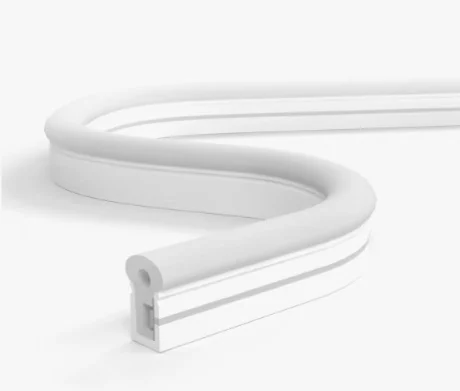
With the flexibility of modular design, clients can quickly adjust LED quantity, strip width, sensing distance, and other parameters to meet diverse market needs. More importantly, this technological breakthrough gives V-SOUND valuable experience. In the future, this solution can be reused in other smart lighting products and potentially extended to broader sensing applications such as smart locks, smart toilets, and automatic dryers.
From a “light-chasing” LED strip to opening a new chapter in intelligent lighting, V-SOUND continues to prove through innovation that in a red-ocean market, companies that accurately understand customer needs and dare to break through technical bottlenecks will always find blue-ocean opportunities. And those seemingly tiny sensor modules are quietly reshaping how we interact with light, pushing intelligent lighting from simple “switch control” into a new era of “movement-responsive” illumination.
— Li Guojun, Founder of V-SOUND
| If you’re looking for a suitable voice chip for your company’s products, feel free to contact us anytime: just take 30 seconds to fill out a short form. Our team will get in touch with you as soon as possible to provide free samples and a detailed quote. We are WayTronic, founded in 1999, with over 25 years of experience specializing in custom voice chip solutions. Backed by a team of 100+ senior engineers, we can precisely meet the diverse needs of different products. We also offer one-on-one selection guidance and technical support to help you find a practical and cost-effective voice chip with minimal effort. We look forward to working with you for mutual success! |
Get In Touch
- +86-755-29606626
- +86-755-29605099
- +86 182 2949 8144
- info@wtsoundic.com
Hours
- Mon-Fri 8:30AM – 6:00PM
- Sat 8:30AM – 6:00PM